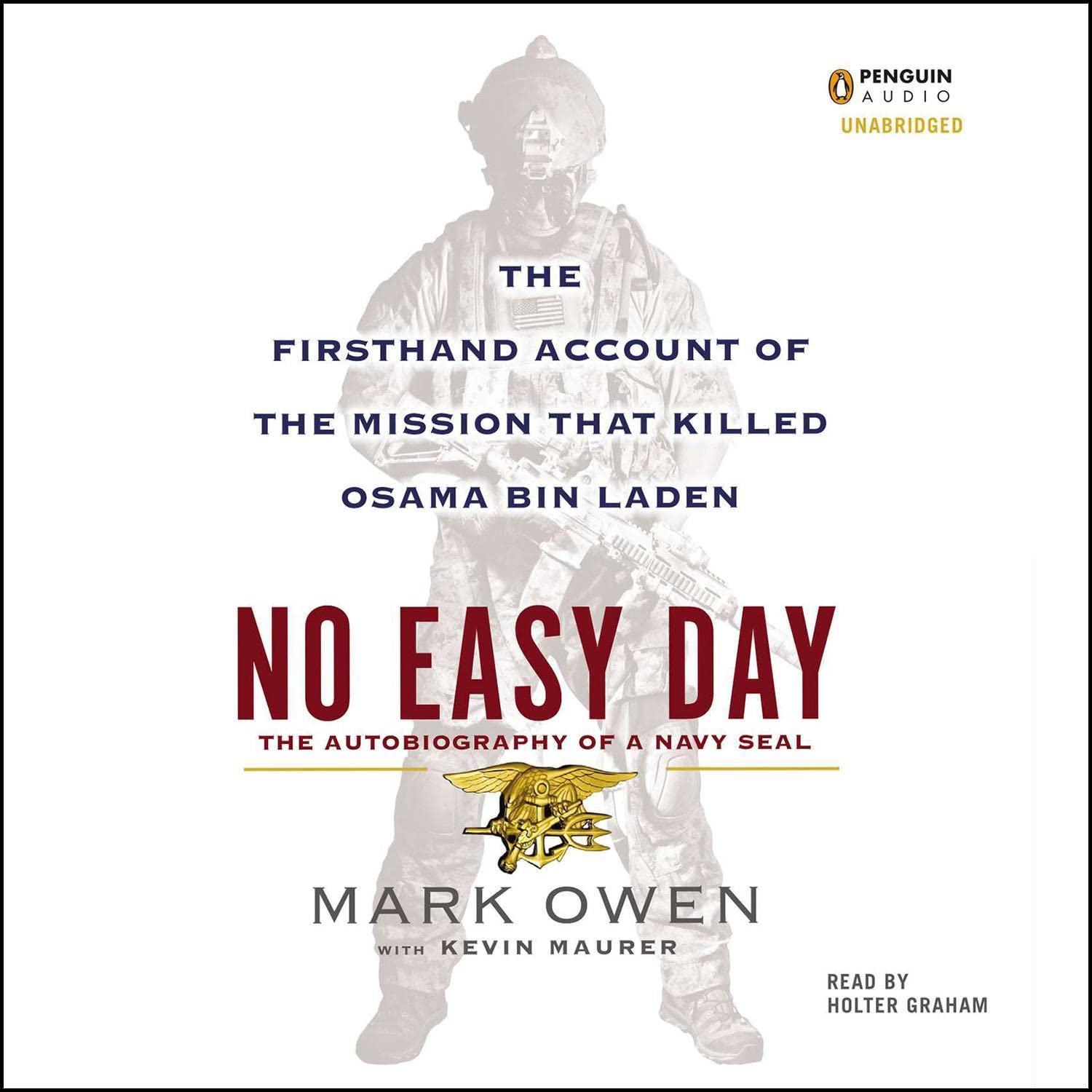
From the Battlefield to the Boardroom: Career Lessons from SEAL Team Six and No Easy Day
Most professional development books feel like homework. They are dry, theoretical manuals filled with charts and buzzwords that are forgotten the moment you close the cover. No Easy Day by Mark Owen, a a former SEAL Team Six operator, is not one of those books.
It is, first and foremost, an adrenaline-fueled, gripping eyewitness account of one of the most significant military operations in modern history: Operation Neptune Spear, the mission that successfully targeted Osama bin Laden. Owen writes with a kinetic, no-nonsense style that places you right in the vibrating hull of a Black Hawk helicopter hurtling toward Abbottabad, Pakistan. It is an incredibly entertaining, page-turning collection of war stories that reads like a thriller.
But beneath the night vision goggles and the high-stakes action, Owen has written one of the best manuals on high performance, leadership, and professional growth available today.
You don’t need to carry a rifle for a living to benefit from the mindset of an elite operator. The principles that allow SEAL Team Six (aka DEVGRU) to execute impossible missions under extreme duress are directly transferable to navigating complex projects, leading teams, and advancing your career.
Here are the key takeaways from No Easy Day that can help you level up in a professional setting.
The Relentless Pursuit of Preparation
The most striking takeaway from the book isn’t the actual raid on Bin Laden’s compound; it’s the agonizing amount of time spent planning and practicing for it.
Owen details months of repetitive, exhausting rehearsals in full gear, utilizing full-scale mock-ups of the target building. They didn’t just plan for success; they obsessively planned for every conceivable failure. When one of the stealth helicopters, the one carrying Owen, actually crashed in the compound courtyard at the start of the real mission, there was no panic. They planned for things to go wrong so they just adapted and continued a “Charlie Mike” (Continue Mission). They simply moved to “Plan B.”
The Work Application: In the corporate world, we often mistake “knowing the material” for preparation. True preparation means stressing your plan before the big presentation. What questions will the CEO ask that you don’t want to answer? What happens if the technology fails during the product demo? Don’t just wing it and hope for the best. “Sweat more in training so you bleed less in battle” applies just as much to Q4 objectives as it does to military operations.
Radical Accountability: The AAR
How does an elite team improve when the stakes are life and death? They check their egos at the door during the After Action Review (AAR).
Owen describes the culture of the SEAL teams as one of brutal honesty. After every training evolution or real-world mission, the team gathers to dissect what happened. Rank does not matter. If the newest guy saw the team leader make a mistake, he is expected to call it out. The goal isn’t to assign blame, but to ensure the mistake never happens again. If you screw up, you owned it immediately, learn from it, and move on.
The Work Application: Most corporate cultures fear failure, leading to finger-pointing or hiding mistakes. To improve rapidly, you must cultivate an environment where it is safe to be wrong, provided you own it. Seek feedback actively. When a project misses its mark, don’t look for excuses; look for the root cause of your own shortcomings and articulate how you will fix it next time.
Master the “Three-Foot World”
The concept of the “three-foot world” is perhaps the most valuable tool for managing workplace stress.
During intense firefights or chaotic situations—like a helicopter crash in a hostile foreign country—it is easy to become overwhelmed by the magnitude of the situation. The SEALs are trained to shrink their focus. Don’t worry about the geopolitical implications of the mission or the entire enemy force. Worry about what is within three feet of you. What is your immediate threat? What is your immediate next task?
The Work Application: When a major client threatens to leave, or a deadline becomes impossibly tight, panic is the enemy. The big picture is too paralyzing. Shrink your world. What is the single next action you can take to improve the situation? Focus entirely on executing that one task perfectly. Then, move to the next. You cannot control the chaos, but you can control your immediate response to it.
Brilliance in the Basics
There is a misconception that elite operators do “advanced” things that normal soldiers don’t. Owen debunks this. He emphasizes that SEAL Team Six operators are just masters of the fundamentals. They shoot better, move better, and communicate better than anyone else because their training never stops. They don’t rely on fancy tricks; they rely on flawless execution of core skills under pressure.
The Work Application: Stop looking for “hacks” or shortcuts to success. Are you brilliant at the basics of your job? Do you communicate clearly? Do you meet deadlines consistently? Are you organized? Are you reliable? Before you try to innovate, ensure your foundation is rock solid. High performance isn’t about doing magic; it’s about doing the ordinary things poorly done by others, extraordinarily well.
Conclusion: The SEAL Mindset in the Modern Workplace
No Easy Day is more than just a historical record of the mission that took out Osama bin Laden. While Mark Owen’s storytelling is undeniably gripping—taking readers through the tension of the breached compound, the narrow hallways of Abbottabad, and the cinematic precision of the raid—the book’s true legacy lies in its philosophy of excellence.
You don’t need to be an elite commando to appreciate the value of a well-executed After Action Review or the mental clarity of the “three-foot world.” Whether you are leading a startup, managing a retail team, or navigating a complex corporate hierarchy, the stakes of your “mission” are real to you. By adopting the SEAL approach—relentless preparation, radical accountability, and a mastery of the fundamentals—you transform your professional life from a series of reactive events into a disciplined pursuit of success.
Mark Owen reminds us that the difference between an amateur and a professional isn’t just talent; it is the willingness to do the hard work when no one is watching. If you can apply even a fraction of the discipline found in these pages to your own career, you’ll find that there are no “easy days,” but there are certainly more successful ones.
 Ryburn.org
Leave a comment