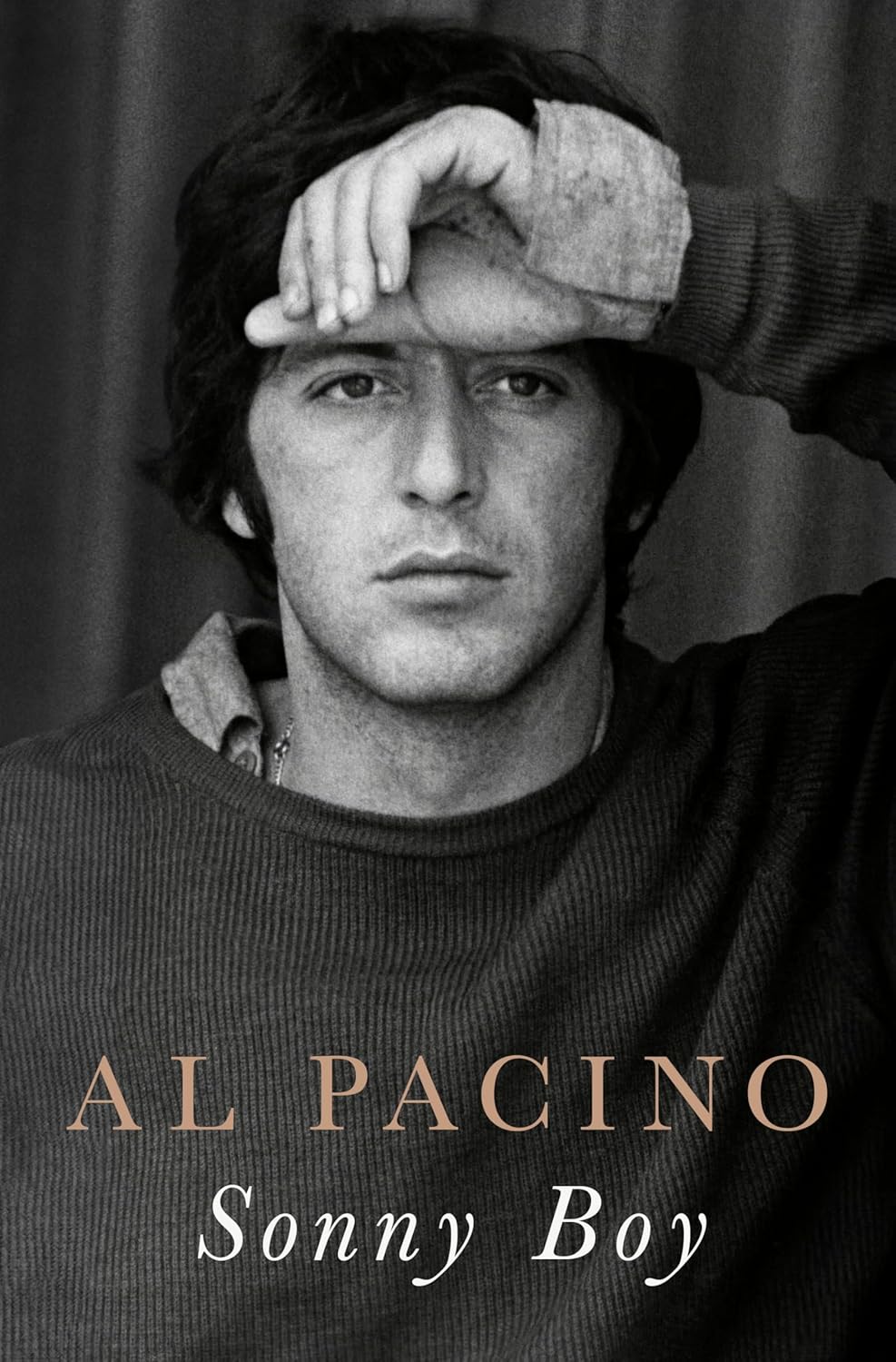
Sonny Boy: Al Pacino’s Autobiography of Love, Loss, and a Life Devoted to the Craft
When an actor like Al Pacino tells his story, it isn’t just a Hollywood memoir—it’s a cultural event. With the release of Sonny Boy in October 2024, Pacino has given the world more than a book about acting or stardom. He has delivered a moving autobiography that is as raw, lyrical, and unflinching as the performances that made him a legend. I decided to listen to the audiobook in this case since Pacino himself narrated it. I was very pleased with the results, and in this blog, I will provide a review and my key takeaways.
For decades, Pacino has been a figure both larger-than-life and deeply enigmatic. His roles—Michael Corleone, Frank Serpico, Tony Montana, and dozens more—have etched themselves into film history. Yet behind the gravitas, the explosions of emotion, and the whispered intensity lies the story of a boy from the South Bronx, raised in turbulence and uncertainty, who discovered in acting not just a career, but a salvation. Sonny Boy is the chronicle of that journey, and it reads like a confession, a love letter, and a reckoning all at once. Pacino is now 84 years old so he wrote this book as a look back and his entire life from childhood through today.
From the South Bronx to Center Stage
Pacino’s memoir opens not in Hollywood but in the streets of the Bronx, where he grew up with his mother and grandparents after his father left and went off to war. Poverty was ever-present, and so was instability. His mother’s mental health struggles left young Al vulnerable, but also profoundly observant. The neighborhood, with its mix of danger, loyalty, and survival, became his first classroom in human behavior. Pacino does not tell this story for sympathy but rather for his readers to understand what makes him who he is. His love of acting, movies, and film came from his mother. When he was very little, she would take him to the movies to escape some of harsh realities of slums in Bronx.
What rescues him, as Sonny Boy makes clear, is not some grand epiphany but a teacher who spots his raw talent and nudges him toward the High School of Performing Arts. That suggestion becomes destiny. From there, Pacino immerses himself in avant-garde theater, living hand-to-mouth in New York, bouncing between odd jobs and cheap apartments, all while chasing the passion of performance. These sections of the book are especially moving because they strip away the myth of overnight stardom. Pacino makes it clear that the early years were marked by rejection, sacrifice, and a bohemian lifestyle that demanded as much resilience as it did passion.
Stardom Arrives Like a Thunderclap
When The Panic in Needle Park gave Pacino his first leading film role in 1971, his career ignited with startling velocity. Within just a few years, he starred in The Godfather, Serpico, and Dog Day Afternoon—a string of masterpieces that cemented his reputation as a generational talent. Pacino did not crave the spotlight or fame. In fact, when it came after the release of The Godfather he lost some anonymity that he enjoyed. It made it hard for him to go places in New York and enjoy them. In Sonny Boy, Pacino recounts stories of just wanting to wander around New York in a cap and jacket to think and being approached constantly by people wanting to talk to him.
In Sonny Boy, Pacino doesn’t just recount the chronology of these roles; he takes the reader into the inner experience of playing them. The nervous energy on set, the collaborative bonds with directors like Francis Ford Coppola and Sidney Lumet, the way he wrestled with his own doubts even while producing iconic work—these revelations make the book feel less like a memoir of triumph and more like a meditation on the fragile alchemy of art. Pacino suffered from Imposter Syndrome that those of us in IT frequently face. He did not call it that of course but he never truly felt like he belonged among the great actors of the time.
What becomes evident is that Pacino never viewed these roles as stepping stones to fame. They were lifelines, opportunities to channel something essential in himself into characters who would live forever on screen.
The Marriage of Art and Commerce
One of the more fascinating themes in Sonny Boy is Pacino’s reflection on what he calls the “vexed marriage” between creativity and commerce. He is candid about the tension between Hollywood’s financial machinery and the artist’s need for authenticity. Pacino has known both the high-water marks of critical acclaim and the sting of commercial disappointment, and he doesn’t shy away from either.
At times, he revisits choices he regrets; at others, he marvels at the unexpected endurance of his career. What grounds him throughout is not the pursuit of fame or money, but the pure devotion to acting itself. For Pacino, the craft is not just a profession—it is his refuge and his way of making sense of life’s chaos.
A Life Lived in Love with Acting
Threaded through Sonny Boy is a golden theme: love. Love for his friends in the Bronx who shaped him, love for the women and collaborators who marked his path, but most enduringly, love for acting. Pacino describes falling in love with the stage long before he could imagine an Oscar or a marquee. That love never left him, even in lean times, even when his personal life faltered, even when critics dismissed him.
There is a humility here, a recognition that ambition can fail, lights can dim, and relationships can fracture. Yet acting remained constant, a wellspring of meaning that carried him through decades of shifting fortunes. That lifelong romance with the craft is what sets Sonny Boy apart from the standard celebrity memoir—it is less about celebrity than about devotion.
Nothing Left to Hide
What makes Sonny Boy astonishing is its candor. Pacino writes as a man with nothing left to prove and nothing left to fear. He is vulnerable in describing his childhood, honest about his missteps, and unsparing in recounting the costs of a life lived in pursuit of art. But the book never sinks into bitterness or regret. Instead, it radiates gratitude—for the teachers who guided him, the collaborators who challenged him, and the mysterious gift of a craft that gave him purpose.
Conclusion: An Actor’s True Legacy
With Sonny Boy, Al Pacino has given us not only his autobiography but also a philosophy of art and life. It is a testament to resilience, to the sustaining power of passion, and to the idea that true success is measured not in accolades or wealth, but in fidelity to one’s calling.
For fans of Pacino, the book is a treasure trove of behind-the-scenes insight and personal revelation. For anyone who has ever wrestled with creativity, identity, or ambition, it is a reminder that what endures is not the glory of the spotlight, but the love that fuels the work.
In the end, Sonny Boy is more than the story of an actor. It is the story of a man who, against all odds, discovered a reason to keep showing up, keep giving, and keep believing—in art, in love, and in life itself.
 Ryburn.org
Leave a comment