Leadership with Empathy: A Practical Guide from Brené Brown
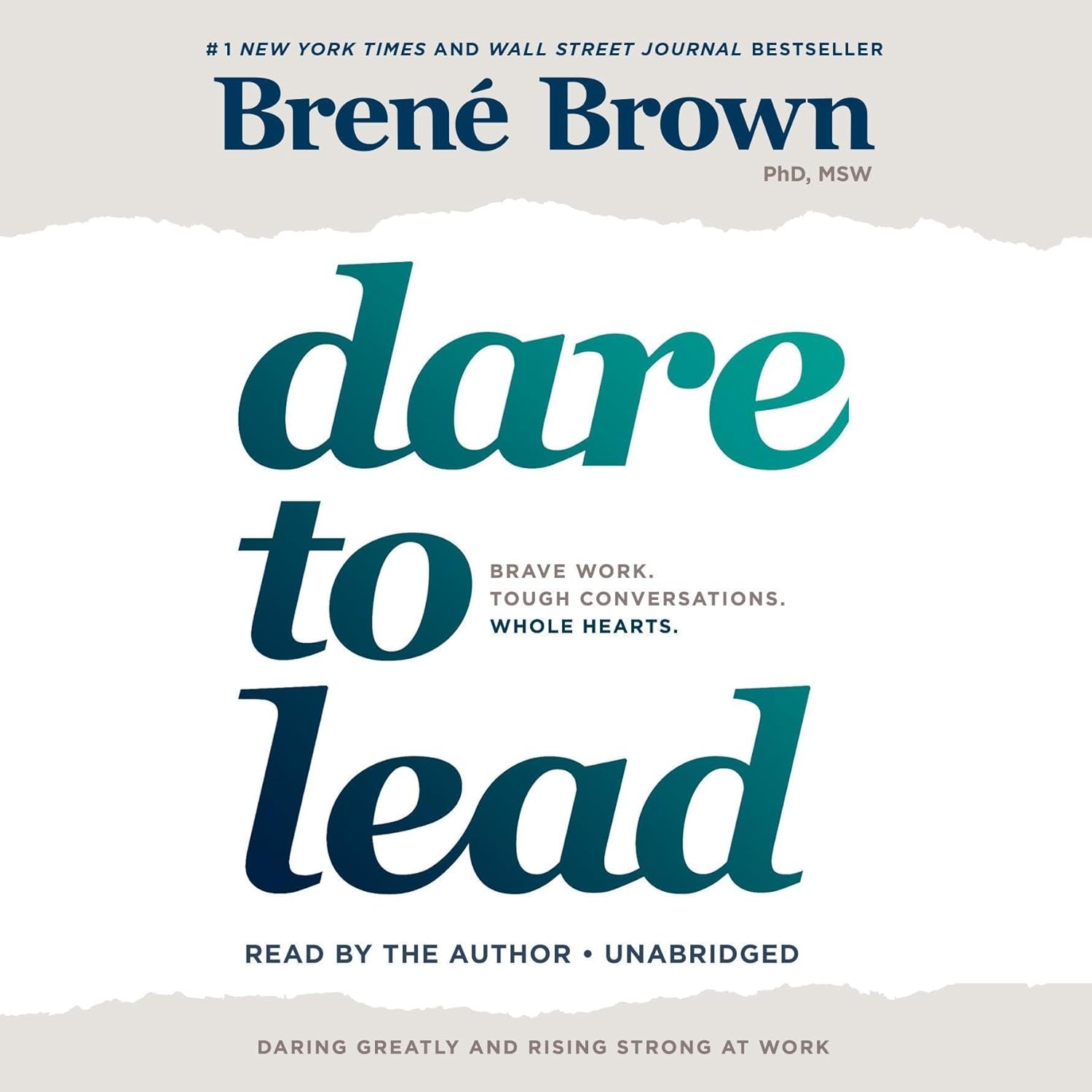
Brené Brown’s Dare to Lead is not just another leadership book; it’s a profound guide for anyone in a position of influence. It challenges the conventional, often armor-plated, view of leadership and instead champions courage, vulnerability, and empathy. Brown argues that in today’s complex world, the leaders we need are those who are willing to lean into discomfort, have tough conversations, and build trust-based cultures. The core premise is simple yet revolutionary: vulnerability isn’t a weakness; it’s our greatest measure of courage. This book is a practical guide, backed by decades of research, for moving from leading with fear to leading with heart. It offers a clear framework for building a more human, and ultimately more effective, workplace. In this blog, I will review Brown’s work and provide my key takeaways from the book.
The Anatomy of Trust: Understanding BRAVING
One of the most powerful and applicable concepts in Dare to Lead is the BRAVING framework. This is Brown’s shorthand for the seven elements of trust, a crucial foundation for any healthy team or organization. She breaks trust down from an abstract feeling into tangible, actionable behaviors. Rather than simply saying “trust is important,” she gives us a language to discuss it through what she calls a rumble, diagnose its absence, and build it intentionally. It’s a reminder that trust isn’t a given; it’s a choice we make and an action we take every single day.
Let’s break down each element of BRAVING:
B – Boundaries
This is the cornerstone. You trust someone when they respect your boundaries, and they trust you when you respect theirs. This means being clear about what’s okay and what’s not, and then following through. A leader who sets clear expectations and doesn’t tolerate disrespectful behavior is demonstrating trust. Likewise, a team member who says “I can’t take on this extra project without letting something else go” is building trust by being honest about their capacity. When boundaries are fuzzy or ignored, it erodes trust because it sends a message that people’s time, energy, and emotional well-being are not valued.
R – Reliability
This is about doing what you say you are going to do. Trust is built in small, consistent actions. A leader who repeatedly misses deadlines or fails to follow up on a promise, no matter how small, quickly loses credibility. Reliability is not about being perfect; it is about being consistent and honest. If you can not deliver, communicate that transparently. Being reliable means being predictable in a good way, allowing others to count on you when it matters.
A – Accountability
This is the willingness to own your mistakes, apologize for them, and make amends. Trust is built when we see others take responsibility for their actions. It is also about holding others accountable in a respectful and constructive way. A leader who blames their team for a failure or a team member who deflects responsibility is a trust hazard. Accountability requires humility and the courage to say, “I messed up.”
V – Vault
The vault is about confidentiality. It is understanding that what you share will be held in confidence. It is not just about secrets; it is about not gossiping or talking about people behind their backs. Brown points out that when someone shares with her issues they are having with someone else, her first thought is “what do they tell others about me?” This is a critical one in the workplace, where rumors and speculation can be incredibly destructive. A leader who is known for discretion and a team that doesn’t engage in backbiting creates a safe and secure environment.
I – Integrity
Integrity is choosing courage over comfort; it is choosing what is right over what is fast, fun, or easy. It is practicing your values rather than simply professing them. A leader with integrity is someone whose actions align with their stated values. If an organization preaches work-life balance but rewards people who work 80-hour weeks, it lacks integrity, and trust is the first casualty.
N – Non-judgment
This is the ability to offer and ask for help without judgment. We trust people who do not use our struggles against us. When a colleague admits they are having a hard time, or a leader shares a past failure, and the response is met with compassion rather than judgment, a deeper level of trust is forged. Non-judgment creates a culture where it is safe to be imperfect and to take risks.
G – Generosity
This element is about being generous in our assumptions about others. It is the willingness to give someone the benefit of the doubt. When a coworker is short with you, do you immediately assume they are angry at you, or do you consider that they might be having a bad day? Generosity of interpretation is a foundational trust-building behavior. It gives people space to be human and to make mistakes without being immediately judged.
In essence, BRAVING transforms the abstract idea of trust into a concrete checklist for both personal and organizational behavior. It gives us the tools to not only recognize a breakdown in trust but to actively and deliberately rebuild it. By making these seven elements a part of our daily language and practice, we can create brave and trusting cultures where people feel safe, respected, and empowered to do their best work.
Conclusion
Brown’s Dare to Lead is a foundational text for modern leadership, but it is far more than a simple management manual. It is a powerful invitation to a new way of working and living. The book’s ultimate message is that leadership is not about titles or power; it is about the willingness to take responsibility for finding the potential in people and processes. It is about cultivating a culture of trust and psychological safety, where failure is a learning opportunity and vulnerability is seen as the courage it is. Brown has a really engaging style where she shares stories from her own life an experiences for the reader to learn from. One of my favorites was her description of an argument she had with her husband about not having any food in the house. She used it as an example of how easy it is for people to mis-understand the intent behind a random comment.
Ultimately, Brown argues that the most effective and courageous leaders are those who have done the difficult inner work. They understand their own stories, they have embraced their own imperfections, and they’ve learned to lead with empathy and integrity. Dare to Lead leaves us with a clear directive: stop looking for quick fixes and start building brave cultures. This requires leaning into discomfort, having hard conversations, and choosing to show up authentically every single day. The work is challenging, but the reward is a workplace where people feel seen, valued, and empowered—a place where both the individual and the organization can truly thrive.
 Ryburn.org
Leave a comment