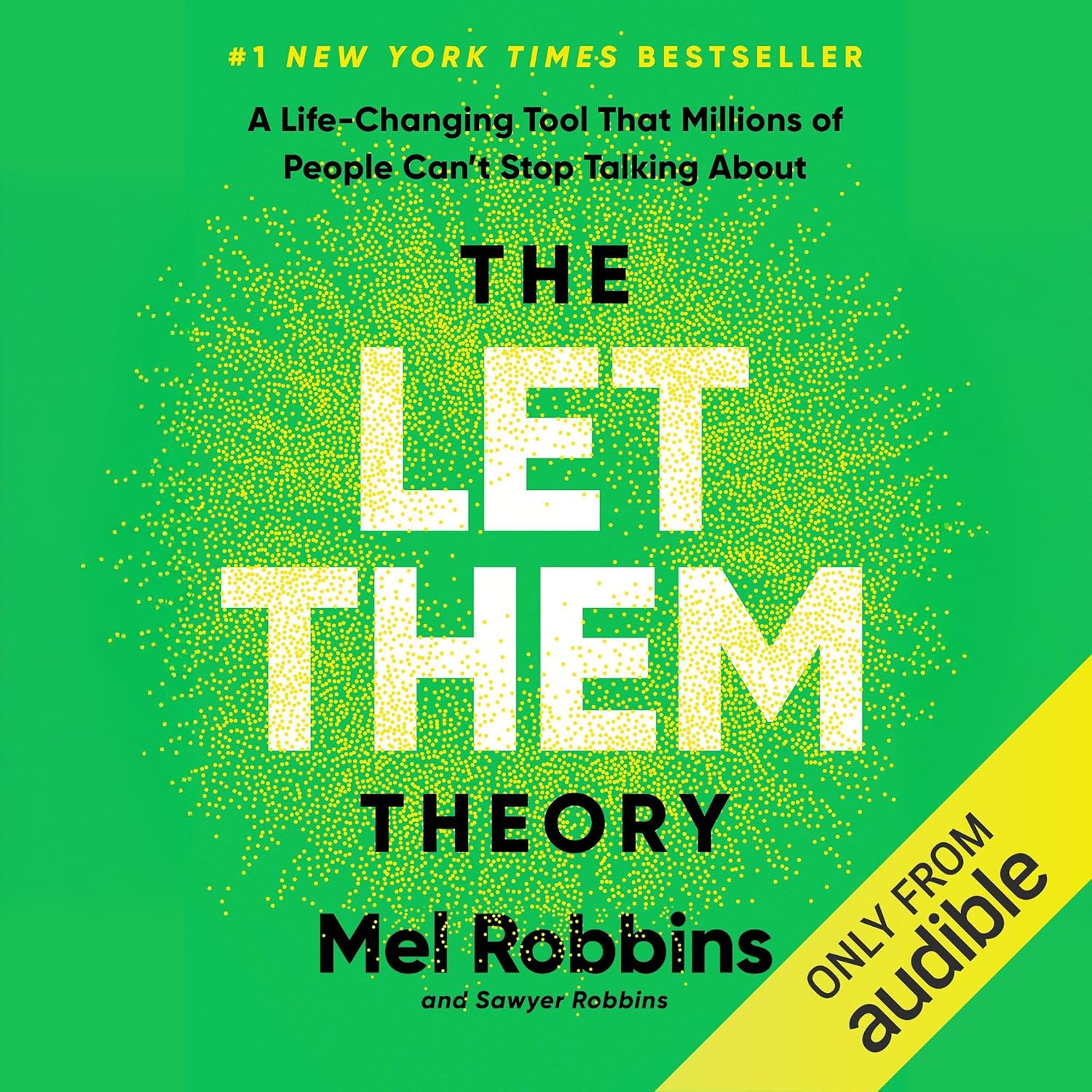
Finding Freedom: Embracing Mel Robbins’ “The Let Them Theory”
We’ve all been there. Agonizing over why someone did what they did. Frustrated because a friend isn’t taking our (obviously brilliant) advice. Anxious about a loved one’s choices. We invest so much emotional energy trying to understand, influence, or even control the people and situations around us. But what if there was a simpler, more empowering way to navigate these complexities? Enter Mel Robbins and her transformative The Let Them Theory.
At its heart, the The Let Them Theory is a radical act of acceptance and a powerful tool for reclaiming your peace and power. It’s about consciously deciding to release the urge to manage, change, or get bogged down by other people’s behavior, choices, and feelings. In this blog, I will review the book and provide my key takeaways.
What Exactly is the “The Let Them Theory”?
Mel Robbins, a renowned motivational speaker, author, and podcast host, introduced this concept as a way to detach from things outside of our control. The theory is deceptively simple:
- If someone doesn’t want to be your friend anymore? Let them.
- If your adult child is making decisions you don’t agree with? Let them.
- If someone misunderstands you or judges you? Let them.
- If your colleagues aren’t pulling their weight on a project in the way you would? Let them.
- If someone doesn’t invite you to their party? Let them.
It’s not about being passive, apathetic, or a doormat. It’s about recognizing that you cannot control another person’s thoughts, feelings, or actions. You can only control your own. By trying to force outcomes or dictate others’ behavior, you’re setting yourself up for frustration, resentment, and a whole lot of wasted energy.
Why is it So Hard to “Let Them”?
Letting go sounds easy in theory, but in practice, it can feel like wrestling a bear. Our desire to control or influence often stems from deep-seated places:
- Fear: We fear the consequences of their actions, fear rejection, fear being hurt, or fear things not going “the right way.”
- Anxiety: Uncertainty is uncomfortable. Trying to manage situations can give us a false sense of security.
- Ego: Sometimes, we believe we know best. Our ego wants to be right, to be validated, and to be the one who “fixes” things.
- Genuine Care (Misguided): Often, especially with loved ones, our attempts to control come from a place of genuine care. We want to protect them from pain or mistakes. However, this can inadvertently stifle their growth and autonomy.
- Past Experiences: Previous hurts or betrayals can make us hyper-vigilant, leading us to try and prevent similar situations by controlling the present.
These impulses are human, but they are also exhausting and ultimately ineffective in the long run.
The Profound Freedom in “Letting Them”
When you truly embrace the “Let Them Theory,” something remarkable happens: you find freedom.
- Reduced Stress and Anxiety: Constantly trying to manage others is a heavy burden. When you let go of that responsibility, you release an enormous amount of mental and emotional stress. You stop replaying scenarios, stop worrying about what they will do, and start focusing on what you can do.
- More Energy for Yourself: Imagine all the energy you spend worrying about, analyzing, or trying to influence others. Now, imagine redirecting that energy towards your own goals, your well-being, and your happiness.
- Healthier Relationships: Ironically, trying to control others often pushes them away or creates resentment. When you “let them” be who they are, you create space for more authentic and respectful connections. It shows trust and allows others to take responsibility for their own lives.
- Increased Self-Respect: Choosing to “let them” is an act of self-respect. It means you value your peace of mind more than the need to be right or in control. You recognize your boundaries and understand that your well-being isn’t dependent on someone else’s approval or actions.
- Clarity on What You Can Control: This theory beautifully highlights the distinction between what is within your sphere of influence and what is not. Your reactions, your choices, your boundaries – these are yours to manage. Theirs are theirs. Robbins even pairs the “Let Them” theory with a “Let Me” theory to give advice on what you can do and what you can control. This is where the power of the theory comes. Focusing all of your thought and energy on taking action on what you can control.
How to Put the “Let Them Theory” into Practice
Embracing this isn’t an overnight switch; it’s a practice. Here are a few ways to start:
- Recognize the Urge: Pay attention to when you feel that familiar tug to step in, to fix, to advise (when unasked), or to worry excessively about someone else’s choices.
- Pause and Ask: Before you react, pause. Ask yourself: “Is this mine to control? Is my intervention truly helpful or necessary, or am I trying to impose my will?”
- Focus on Your Response: You can’t control if someone is rude, but you can control how you respond to their rudeness. You can choose to disengage, set a boundary, or not take it personally. Let Me.
- Set Boundaries, Don’t Build Walls: “Letting them” doesn’t mean tolerating disrespect or abuse. It means you let them make their choices, and you make yours. Your choice might be to distance yourself or clearly state what you will and won’t accept in your life. Let Me.
- Understand it’s Not About Not Caring: You can care deeply about someone and still “let them” navigate their own path, even if it involves making mistakes. Support can look like being there for them, not trying to live their life for them. Robbins goes deep into this aspect in a chapter about helping people who are struggling with addiction or mental health concerns.
- Mourn the Expectation (If Needed): Sometimes, “letting them” means letting go of a specific outcome you hoped for. Allow yourself to feel that disappointment, then release it.
The Power of Reclaiming Your Peace
The Let Them Theory is more than just a catchy phrase; it’s a pathway to profound personal peace and empowerment. It encourages you to shift your focus from the uncontrollable to the controllable, from external chaos to internal calm.
It won’t always be easy. There will be times when every fiber of your being wants to jump in. But with practice, you’ll find that the relief and freedom that come from truly “letting them” are far more rewarding than the fleeting and often illusory sense of control you were chasing.
So, the next time you find yourself tangled in someone else’s drama or choices, take a breath and whisper to yourself: “Let them.” And then, go live your own life, beautifully and freely.
 Ryburn.org