Introduction
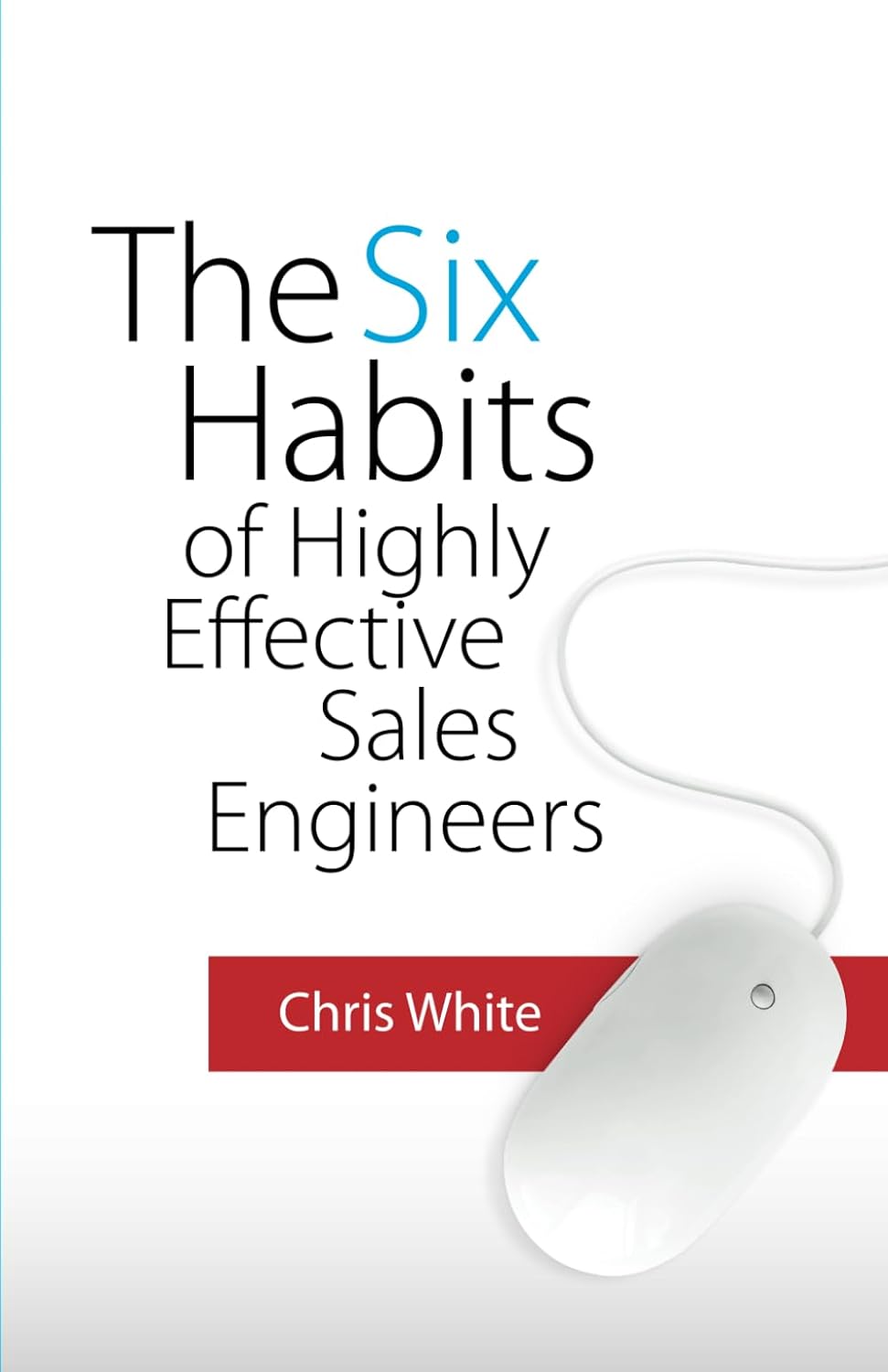
Sales engineering is a crucial yet often misunderstood role in the world of business to business (B2B) sales. Bridging the gap between technical expertise and revenue growth, sales engineers play a vital role in the success of a company’s sales team. In his book, The Six Habits of Highly Effective Sales Engineers, Chris White provides a structured framework that helps sales engineers elevate their performance and maximize their impact. This book serves as a guide to excelling in presales by blending technical knowledge with effective sales strategies. In this blog, I will review White’s book and provide some of my key takeaways.
Understanding the Role of a Sales Engineer
Before diving into the six habits, it’s important to understand what sales engineers do. They are not just tech experts who answer product functionality questions; they are strategic partners in the sales process. They help prospects see the real value of a product, addressing concerns and demonstrating solutions in a way that speaks to business outcomes. White’s book emphasizes that the best sales engineers aren’t just technically proficient—they are also skilled communicators, problem-solvers, and team players.
The Six Habits of Highly Effective Sales Engineers
Chris White distills the essence of sales engineering excellence into six key habits. These habits, when cultivated, allow sales engineers to operate at their peak potential, fostering better collaboration with sales teams and deeper connections with prospects.
1. Partner
Many sales engineers operate in silos, focusing on the technical aspects of a deal while leaving the “selling” to the sales reps. White argues that a truly effective sales engineer sees themselves as a co-pilot in the sales process. They work closely with account executives to align their technical presentations with business needs, ensuring that the technical pitch supports the broader sales strategy. This partnership approach leads to stronger, more cohesive sales efforts. When a sales rep and sales engineer are partnering well it’s like musicians playing a duet. The whole is great than the sum of the parts and it’s a thing of beauty to watch.
2. Probe
Technical knowledge alone is not enough. Sales engineers must understand their customers’ industries, challenges, and business goals. White emphasizes that effective SEs take the time to research their prospects, ask insightful questions, and tailor their presentations accordingly. By demonstrating a deep understanding of customer pain points, they position themselves as trusted advisors rather than just product experts. White argues that SEs should insist on a technical discovery call to ask all their own questions in order to truly prepare a compelling demo that speaks to the business outcomes the customer is looking to solve.
3. Prepare
Once an SE has a firm grasp of the customer’s needs through their Technical Discovery meeting, it’s time to put together that amazing demo. This requires the SE to balance the demo content they will show on the screen with the demo script of what they will say. Facts and features don’t sell—stories do. White encourages sales engineers to develop the art of storytelling. A well-crafted narrative that highlights real-world challenges, solutions, and successful outcomes makes technical demonstrations more engaging and memorable. Storytelling helps SEs connect emotionally with prospects and showcase the true impact of their solutions.
4. Practice
As the old adage goes, “Practice Makes Perfect.” Anyone who has done numerous live demos knows that if something can go wrong it will. Anything from a bad Internet connection to a code push to a SaaS platform can cause minor differences that what an SE prepared for. Going over and over your demo can help catch and remove as many of these glitches as possible. White also stresses the importance of tailoring demos to each audience, focusing on relevant features rather than overwhelming prospects with every technical detail. The average person can only remember three facts. So why do we, as SEs, attempt to demo every feature our product offers and expect the audience to follow all of that? Effective SEs ensure that their demos address specific pain points, keeping the customer engaged and showing them exactly how the product can improve their business.
5. Perform
Whether in a boardroom or on a virtual call, sales engineers must know how to control the dynamics of a presentation. White highlights strategies for managing different personalities, handling difficult questions, and maintaining engagement throughout the demo. A confident and composed SE can navigate unexpected challenges and steer conversations towards a successful outcome. In the two chapter on Perform, White offers a number of tips and tricks that SEs can master to deal with various situations. These two chapters were worth the price of the book alone.
6. Perfect
The work of a sales engineer doesn’t end when the demo is over. White underscores the importance of the de-brief. Professional athletes spend the day after a game reviewing the game footage and talking with their coaches about how to improve before the next game. SEs, like all professionals, should constantly be working to perfect their craft. White notes that no one is perfect but the pursuit of perfection is the goal. Having a de-brief with the sales rep can also be valuable. Many times they can offer insights and feedback the SE did not catch. Plus it helps with Habit 1 of partnering with your rep. Pro tip: while you are at it provide them some feedback on their performance in the meeting so you both get stronger for the next opportunity.
Why These Habits Matter
Mastering these six habits transforms an average sales engineer into an invaluable asset. Companies that embrace these principles see stronger sales performance, higher win rates, and deeper customer relationships. Sales engineers who develop these habits differentiate themselves in a competitive market, positioning themselves for long-term career success.
Final Thoughts
Chris White’s The Six Habits of Highly Effective Sales Engineers is an essential read for anyone in presales or technical sales. It goes beyond technical expertise, highlighting the importance of communication, collaboration, and strategic thinking. Whether you’re a seasoned SE or just starting your career, applying these habits can help you become more effective, influential, and successful in the world of sales engineering.
 Ryburn.org
Leave a comment