Taking Management Output to the Next Level
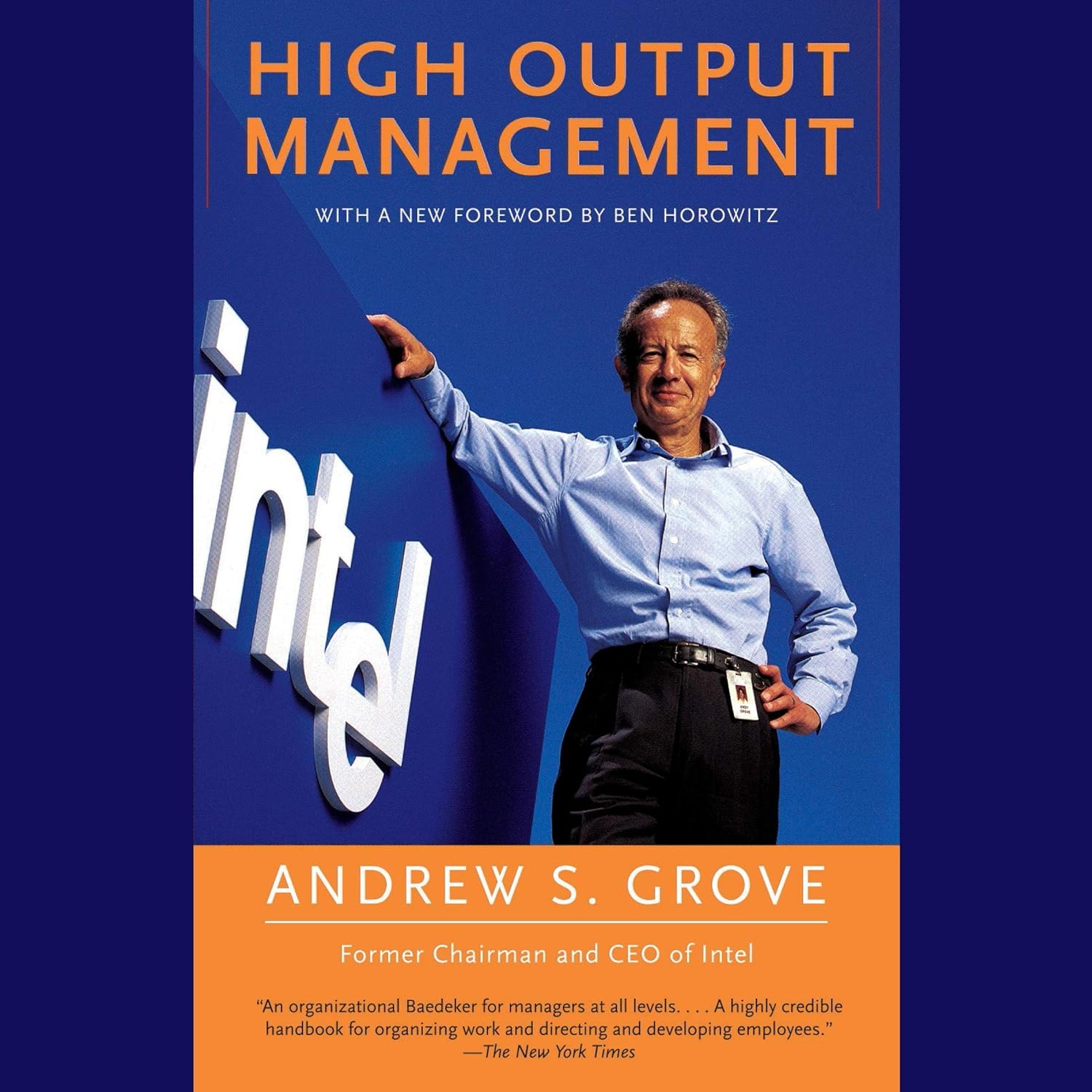
Andy Grove’s High Output Management isn’t just a business book; it’s a management philosophy distilled into actionable principles. Decades after its initial publication, its lessons remain remarkably relevant, offering a timeless framework for managers seeking to maximize productivity and efficiency. Grove, the legendary co-founder and former CEO of Intel, doesn’t just theorize; he provides a practical, hands-on guide that emphasizes measurable results and continuous improvement. I recently read The Hard Thing About Hard Things in which Ben Horowitz recommended this book so I gave it a read. In this blog, I give an overview of the book along with my key takeaways.
The Foundation: Managerial Output
At the heart of Grove’s philosophy lies the concept of managerial output. He argues that a manager’s output is the output of the organization units they influence. This means a manager’s effectiveness isn’t solely based on their individual efforts but on the collective performance of their team. To achieve high output, managers must focus on activities that leverage their time and multiply their impact by improving the effectiveness of their teams.
Amplifying Impact: Leverage
One of the most crucial elements in Grove’s framework is the concept of leverage. He defines leverage as the output generated per unit of managerial activity. High-leverage activities are those that produce the most significant results with the least amount of effort. Examples include giving effective trainings, conducting productive meetings, and developing systems that streamline processes. Conversely, low-leverage activities, like micromanaging or engaging in unnecessary administrative tasks, should be minimized.
Staying Informed: Information Gathering
Grove emphasizes the importance of information gathering as a fundamental managerial task. He advocates for a “breakfast factory” approach, where managers regularly collect data and insights from various sources to stay informed and make informed decisions. This involves attending meetings, conducting one-on-one conversations, and reviewing reports. By staying close to the ground, managers can identify potential problems and opportunities before they escalate.
Adapting to Maturity: Task-Relevant Maturity (TRM)
Another cornerstone of High Output Management is the concept of task-relevant maturity (TRM). Grove argues that a manager’s style should adapt to the maturity level of their subordinates. When subordinates have low TRM, meaning they lack the skills or experience to perform a task independently, managers should adopt a more directive approach, providing clear instructions and close supervision. As subordinates gain TRM, managers can gradually delegate more responsibility and adopt a more supportive role.
Strategic Direction: Planning for Output
Grove’s focus on planning is equally critical. He advocates for a structured approach to planning, emphasizing the importance of setting clear objectives, identifying key performance indicators (KPIs), and developing action plans to achieve those objectives. He introduces the concept of output-oriented tasks, which are tasks designed to produce specific, measurable results. By focusing on output, managers can ensure that their efforts are aligned with the organization’s goals.
Maximizing Meeting Effectiveness
Meetings, often perceived as a necessary evil, are transformed into powerful tools for productivity in Grove’s framework. He distinguishes between process-oriented meetings, such as one-on-ones and staff meetings, and mission-oriented meetings, which are focused on solving specific problems or making decisions. Grove provides practical tips for conducting effective meetings, including setting clear agendas, sticking to time limits, and ensuring that action items are assigned and followed up.
Objective Evaluation: Performance Reviews
The concept of performance reviews is also addressed in detail. Grove advocates for a rigorous and objective approach to performance evaluation, emphasizing the importance of providing specific feedback based on measurable results. He encourages managers to focus on both performance and potential, identifying areas for improvement and providing opportunities for growth.
Data-Driven Decisions: The Power of Indicators
Grove’s emphasis on indicators is crucial in his management methodology. He encourages the use of indicators to track progress and identify areas for improvement. Indicators should be carefully chosen to reflect the most critical aspects of performance and should be regularly reviewed and updated. This data driven approach allows for quick adjustments and helps maintain a high level of overall output.
Organizational Agility: Hybrid Organizations
Furthermore, Grove’s approach to hybrid organizations is worth noting. As companies grow, they often need to adapt their organizational structure to accommodate different types of work. Grove discusses the importance of creating hybrid organizations that combine the flexibility of project-oriented teams with the efficiency of functional departments.
The Enduring Legacy of Grove’s Principles
In essence, High Output Management provides a comprehensive framework for managers to maximize their effectiveness and drive organizational success. Grove’s emphasis on leverage, information gathering, task-relevant maturity, planning, meetings, performance reviews, and indicators offers a practical and actionable guide for managers at all levels. By applying these principles, managers can create a culture of high performance and achieve sustainable results.
Grove’s legacy extends beyond Intel’s success. He has provided a blueprint for effective management that continues to inspire and empower leaders around the world. High Output Management is more than just a book; it’s a testament to the power of disciplined thinking and relentless execution. It is a must-read for anyone who aspires to lead and manage effectively in today’s dynamic business environment.
 Ryburn.org
Leave a comment