Introduction
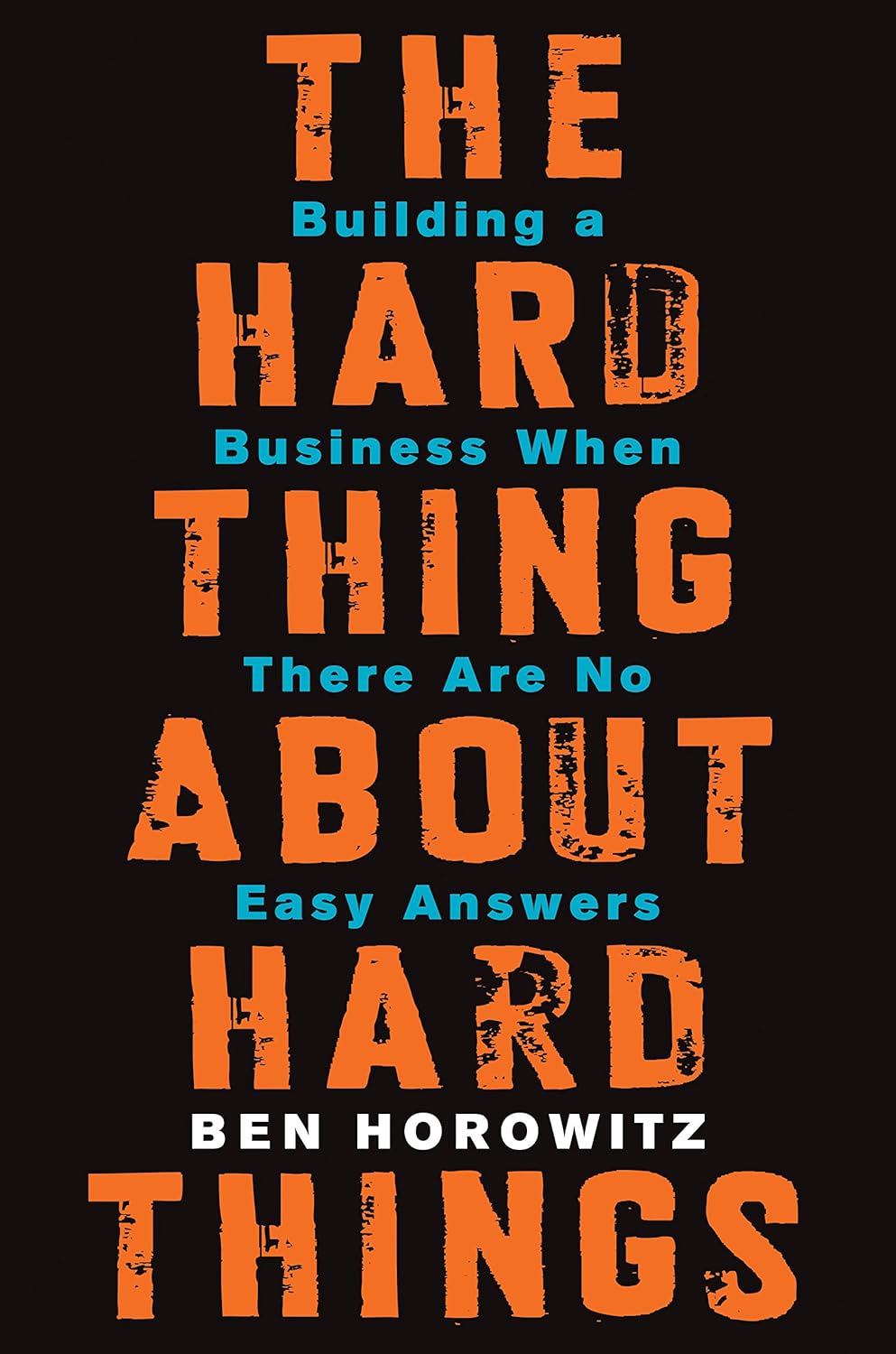
Ben Horowitz‘s The Hard Thing About Hard Things isn’t just another business book. It’s a raw, honest, and often uncomfortable look at the realities of building and running a startup, particularly when things go sideways (and they inevitably will). It’s a book that resonates with anyone who’s dared to dream big, faced seemingly insurmountable obstacles, and wrestled with the tough decisions that come with leadership. Horowitz is well know for his leadership and experience in the venture capital arena. In this blog, I will review the advise that Horowitz gives entrepreneurs when it comes to running and growing your startup.
Part 1: The Struggle is Real (and It’s Okay)
Horowitz doesn’t sugarcoat the startup experience. He starts by dismantling the myth of the overnight success and dives headfirst into the brutal reality: building a company is incredibly hard. He emphasizes the constant struggle, the relentless pressure, and the sheer number of things that can go wrong. This honesty is refreshing, especially in a world saturated with the myth that hard work is all you need and stories of effortless success.
One of the most powerful concepts Horowitz introduces early on is the idea of “wartime” versus “peacetime.” He argues that a company’s operating mode needs to shift depending on the circumstances. Wartime demands decisive action, unwavering focus, and a willingness to make tough calls quickly. Peacetime, on the other hand, allows for more strategic planning, process optimization, and a focus on long-term growth. The key, he argues, is recognizing which mode you’re in and adapting accordingly. Too many companies operate in wartime when peacetime is called for, or vice-versa, leading to inefficiency and ultimately, failure. Horowitz argues that very few CEOs are equally good in peacetime and in wartime. Most CEOs are really good in one category or the other, but not both.
He also tackles the often-ignored emotional toll of leadership. The loneliness at the top, the weight of responsibility, the constant self-doubt – these are all realities that Horowitz acknowledges and addresses. He emphasizes the importance of building a support network, seeking advice from trusted mentors, and developing coping mechanisms to handle the stress. He’s not advocating for a stiff upper lip; he’s acknowledging the very real human cost of leadership. Most, if not all, of these mentors have to come from the outside as there is only so much you can share with your staff and still keep them focused on the task at hand. For publicly traded company CEOs, it’s very important to choose your mentors wisely so the discussion does not leak to the media and impact the shareholder.
Part 2: Building a Company When There Are No Easy Answers
This section delves into the practical aspects of building a company, from hiring and firing to managing performance and navigating difficult situations. Horowitz offers concrete advice, often based on his own experiences, both successful and disastrous.
His approach to hiring is particularly insightful. He stresses the importance of hiring for strengths, not just lack of weaknesses. He argues that it’s better to have a team of specialists with clearly defined roles than a group of generalists who are mediocre at everything. He also emphasizes the importance of cultural fit, but not in the superficial sense. He’s talking about shared values, a common work ethic, and a genuine commitment to the company’s mission. Horowitz makes the point that having executives that are bought in to the mission is how you get the kind of effort and drive from the team you will need to survive in today’s economy where most startups fail and competitors are constantly coming after you.
Firing is another topic that Horowitz tackles head-on. He acknowledges that it’s never easy, but sometimes necessary. He provides a framework for making these decisions, emphasizing the importance of fairness, transparency, and respect. He also stresses the importance of acting quickly and decisively, rather than letting a bad situation fester. Horowitz has some great advise on how to handle the unpleasant task of having to fire one of your executives including how to handle communications with your board on this topic.
Performance management is another area where Horowitz offers practical advice. He advocates for a system of regular feedback, both positive and negative. He believes that employees should know where they stand and what they need to do to improve. He also emphasizes the importance of setting clear expectations and holding people accountable.
Part 3: Leading Through the Tough Times (Because They Will Come)
This section is perhaps the most valuable part of the book, particularly for those facing challenging circumstances. Horowitz draws on his own experiences of navigating near-death business experiences, economic downturns, and competitive threats.
He shares his insights on how to manage cash flow, make tough decisions under pressure, and maintain morale during difficult times. He emphasizes the importance of honesty and transparency, even when delivering bad news. He argues that employees are more likely to trust and respect a leader who is honest with them, even if the message is difficult to hear. Horowitz should know as he had to communicate to his staff that they were selling Loudcloud’s primary business to EDS so they could transform the business into Opsware.
He also discusses the importance of maintaining a long-term vision, even when facing short-term challenges. He argues that it’s crucial to stay focused on the company’s ultimate goals, even when things are tough. This requires a strong sense of conviction and the ability to inspire others to believe in the vision, even when the odds seem stacked against them. Again, the majority of people in 2002 did not think Opsware would survive but Horowitz not only believed it himself but could compel his staff to work hard for the vision.
One of the most compelling examples in the book is Horowitz’s account of how he navigated the dot-com crash. He shares the difficult decisions he had to make, the sacrifices he had to endure, and the lessons he learned along the way. This section is a masterclass in crisis management and provides valuable insights for anyone facing similar challenges.
Part 4: Culture, Leadership, and the Importance of “Why”
Beyond the tactical advice, The Hard Thing About Hard Things also delves into the importance of culture and leadership. Horowitz argues that a strong company culture is essential for long-term success. He defines culture as the set of shared values and beliefs that guide a company’s behavior. He emphasizes the importance of being intentional about building the culture you want, rather than letting it evolve organically. Horowitz also points out that maintaining a strong culture as you grow and scale is very difficult. It gets passed down through new hire and may not have the same impact as it did when it came directly from interactions with the co-founder and CEO in the early days of the company.
He also explores the different types of leadership styles and argues that there is no one-size-fits-all approach. He believes that effective leaders adapt their style to the situation and the needs of their team. He also emphasizes the importance of authenticity and integrity. He argues that leaders must be true to themselves and act in accordance with their values.
Throughout the book, Horowitz emphasizes the importance of having a clear “why.” He argues that employees are more motivated and engaged when they understand the company’s mission and how their work contributes to it. He believes that a strong sense of purpose is essential for building a successful company.
Beyond the Pages: Enduring Lessons and Practical Application
The Hard Thing About Hard Things isn’t just a theoretical treatise; it’s a practical guide filled with actionable advice. It’s a book you can return to again and again, especially when facing your own “hard things.” The book’s strength lies in its honesty, its practicality, and its focus on the human element of leadership. It doesn’t offer easy answers, but it does provide a framework for thinking through difficult problems and making tough decisions.
The lessons within its pages are applicable to a wide range of situations, not just startups. Anyone facing challenges in leadership, management, or even personal life can benefit from Horowitz’s insights. The book’s enduring value lies in its timeless wisdom about the nature of struggle, the importance of resilience, and the power of leadership.
Conclusion
This review has barely scratched the surface of the wealth of information contained within The Hard Thing About Hard Things. It’s a book that deserves to be read, re-read, and discussed. It’s a book that will make you think, challenge your assumptions, and perhaps even make you feel a little less alone in the struggle. The hard things are, indeed, hard. But as Horowitz so eloquently demonstrates, they are also the things that ultimately define us, shape us, and lead to the greatest achievements. So, embrace the struggle, learn from your mistakes, and never stop fighting for your vision. Because, as the book reminds us, the hard thing about hard things is not that they are hard, but that they are what make success possible. And that’s a lesson worth learning, and relearning, again and again. This isn’t just a book review; it’s an invitation to engage with the ideas, grapple with the challenges, and ultimately, find your own path through the hard things.
 Ryburn.org