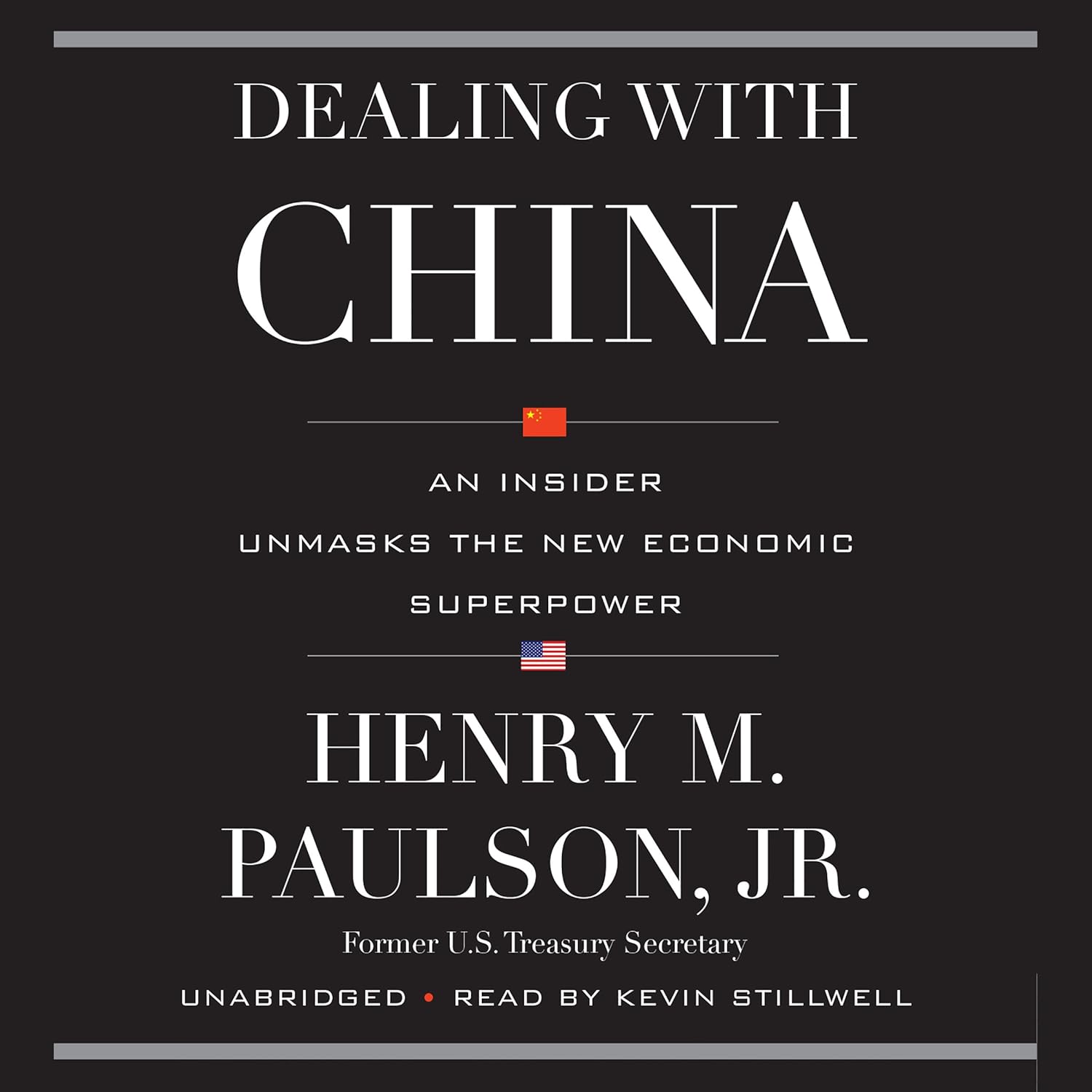
“Dealing with China” – Henry Paulson
Henry Paulson, a former Goldman Sachs CEO and the former U.S. Treasury Secretary, offers a unique perspective on China’s economic rise in his book, Dealing with China. With unprecedented access to Chinese leadership, Paulson provides a firsthand account of the nation’s transformation and the challenges it poses to the global economic order. A while back, I read Paulson’s book, On the Brink, about the 2008 financial crisis. I really enjoyed his explanations so I decided to give Dealing with China a read as well. In this blog, I will give a review of the book along with my key takeaways.
Paulson begins by tracing China’s economic history, from its tumultuous past to its remarkable resurgence under Deng Xiaoping. He emphasizes the role of market reforms, foreign investment, and infrastructure development in driving China’s growth. Paulson describes how he made progress both at Goldman Sachs and as U.S. Treasury Secretary in building a relationship with Chinese officials. He led an initiative called SED (Strategy Economic Dialog) which focused on China’s desire for economic and financial growth to accomplish a ride range of other issues. However, he also acknowledges the significant challenges faced by the Chinese government, including income inequality, environmental degradation, and social injustices.
A central theme in the book is the importance of understanding China’s unique cultural and political context. Paulson argues that Western business leaders often make mistakes by applying traditional Western models to China. He emphasizes the need for patience, flexibility, and a long-term perspective when dealing with Chinese counterparts.
One of Paulson’s key insights is the role of personal relationships in Chinese business and politics. He describes how guanxi, a Chinese concept of personal connections, plays a crucial role in decision-making and negotiation. Paulson argues that cultivating strong relationships with Chinese leaders is essential for success in the Chinese market.
The book also addresses the complexities of the U.S.-China relationship. Paulson acknowledges the interdependence of the two economies but warns of the potential for conflict if not managed carefully. He advocates for a cooperative approach, based on mutual respect and understanding, to address shared challenges such as climate change, trade imbalances, and regional security.
Paulson’s insights into China’s economic system and its relationship with the West are particularly valuable in light of the ongoing trade tensions between the two countries. With the upcoming election in the United States, how to deal with China will be a big debate on both sides of the aisle. Paulson’s book offers a nuanced perspective that challenges simplistic views of China as either a threat or an opportunity.
Conclusion
In conclusion, Dealing with China is a must-read for anyone interested in understanding the rise of China and its implications for the global economy. Paulson’s firsthand experience and deep knowledge of Chinese culture and politics make this book a valuable resource for policymakers, business leaders, and students alike.
 Ryburn.org
Leave a comment