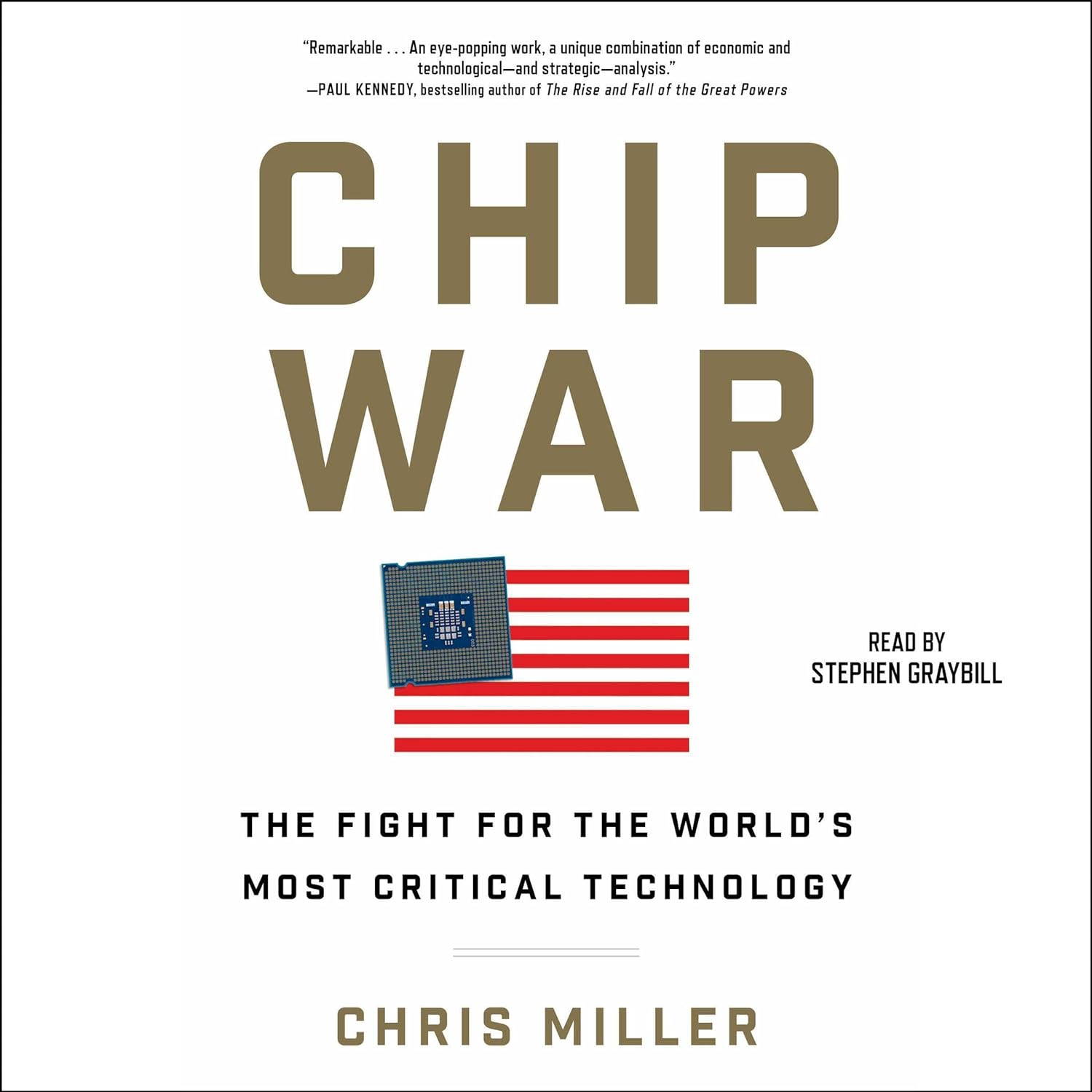
Chip War: The Quest to Dominate the World’s Most Critical Technology
Chris Miller’s Chip War is an exploration of the often-overlooked yet undeniably crucial world of semiconductors. In a world dominated by digital technology, these tiny chips have become the lifeblood of modern economies and societies. Miller masterfully weaves together history, economics, and geopolitics to highlight the high-stakes battle for chip supremacy. In this blog, I will provide an overview of the book and the key takeaways I drew from it.
A Story About Power
At its core, Chip War is a story about power. The nation that controls the chip industry controls the future. Miller convincingly argues that the semiconductor industry has become as strategically important as oil was in the 20th century. From smartphones to supercomputers, from cars to military hardware like missiles and guidance systems, chips are everywhere. The nation that can design, manufacture, and deploy them most effectively will hold a significant advantage. They will dominate the global competition for economic and military dominance.
A Historical Journey
The book delves deep into the history of the semiconductor industry. It traces its origins from the early days of transistor development to the modern day GPUs. Miller describes the founding of the some of the worlds largest semiconductor companies and the visionaries behind them. It’s a fascinating journey that highlights the pivotal role of American innovation in shaping the industry. The United States has historically been the undisputed leader. This is clear from the history of innovation coming out of Silicon Valley. It is also seen in the development of groundbreaking chip architectures.
The Rise of China: A New Cold War
One of the most compelling aspects of Chip War is its exploration of the geopolitical implications of the chip industry. China, with its immense resources and ambitious goals, is challenging American dominance. Miller does an excellent job of outlining China’s strategy to become a chip superpower. The Chinese government has invested billions of dollars in research and development. They have built massive chip manufacturing facilities and enacted policies to attract top talent. During the Cold War, Russia often stole intellectual property from the United States with an aim to build better weapon systems. China is taking a similar path since their laws do not offer protections for patents and other intellectual property.
The Global Ecosystem
The book also highlights the strategic importance of Taiwan, home to the world’s most advanced chip manufacturing facilities. For years, American companies have focused on chip design. They have outsourced the fabrication (fab) of chips to companies in Asia like TSMC. The potential consequences of a conflict in the Taiwan Strait are staggering. Miller does an excellent job of explaining the risks involved.
Chip War is primarily focused on the United States, Taiwan, and China. However, the book also touches on the role of other countries in the global chip ecosystem. South Korea, Japan, and the Netherlands, for example, are critical players in the chip supply chain. Miller emphasizes the importance of global cooperation in maintaining a stable and resilient chip industry.
Conclusion
Chip War is a must-read for anyone interested in understanding the history of semiconductors and the forces shaping the 21st century. Miller does a nice job of taking a complex topic and making it approachable by a broad audience of readers. The book is not just some dry analysis of the semiconductor industry; it’s a thrilling story of innovation, competition, and geopolitical intrigue. As the world becomes increasingly reliant on technology, the battle for chip supremacy will only intensify. Chip War provides essential insights into this critical struggle.
 Ryburn.org
Leave a comment