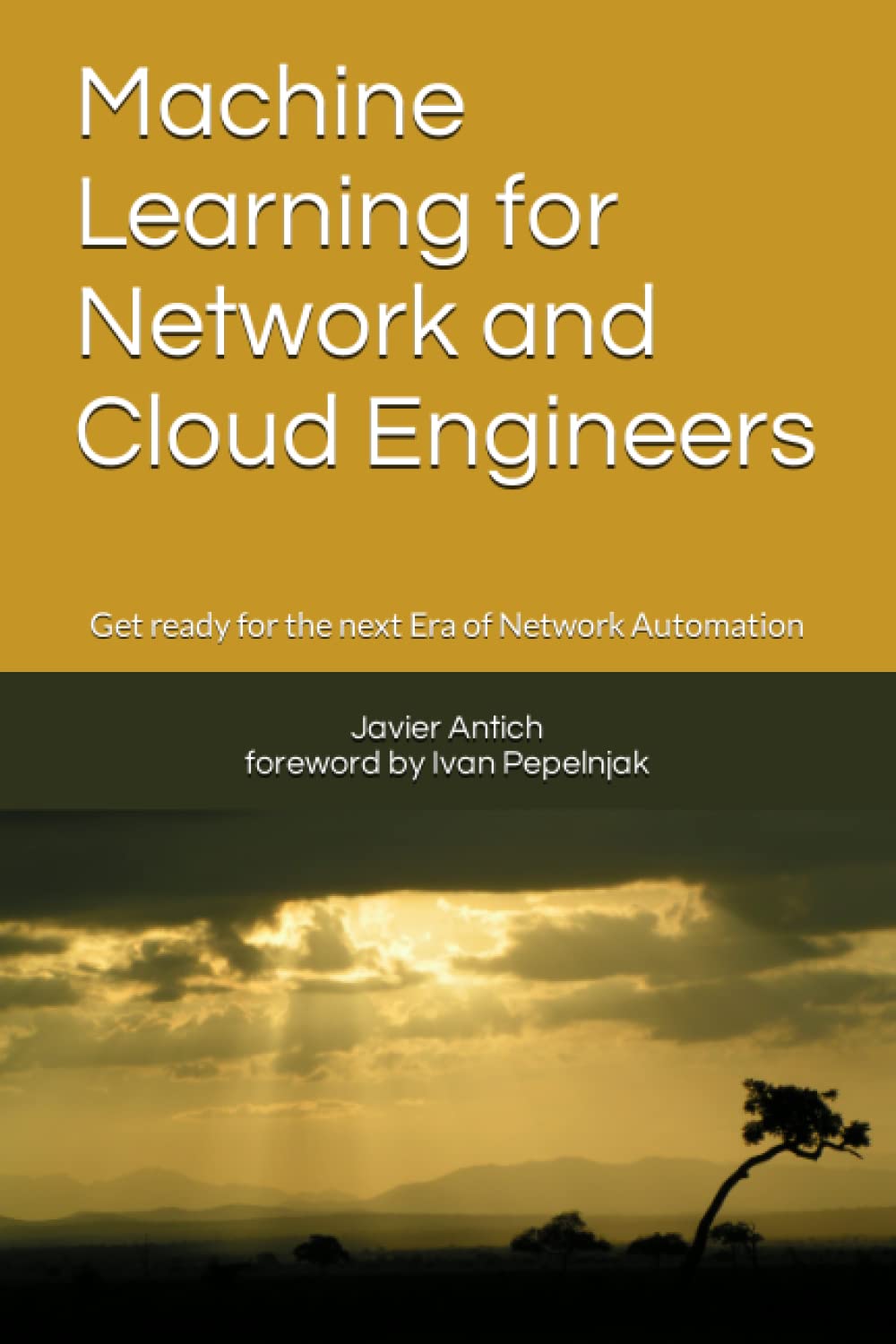
Network Automation’s Future: Machine Learning for Network and Cloud Engineers by Javier Antich
The world of networks and cloud infrastructure is constantly evolving. Complexity is rising, yet these systems remain critical for businesses of all sizes. Network and cloud engineers are facing a pressure cooker: how to manage ever-growing infrastructure while maintaining efficiency and performance.
Why Machine Learning for Network and Cloud Engineers?
The book’s core message is clear: ML isn’t some distant future technology, it’s the present and future of network automation. Here’s why network and cloud engineers should embrace it:
- Complexity Management: Traditional scripting and automation tools struggle to keep pace with ever-growing infrastructure. ML algorithms can learn patterns, identify anomalies, and automate tasks that would be overwhelming for manual configuration and simple scripts.
- Proactive Problem Solving: Network issues are often reactive – you wait for a problem to arise before addressing it. ML can analyze network data and predict potential problems based on trends in data before they impact service, allowing for proactive solutions and improved network uptime.
- Improved Decision Making: The sheer volume of data generated by networks can be overwhelming. ML algorithms can analyze this data and provide engineers with actionable insights, leading to better decision-making and resource allocation.
Beyond the Theory: Practical Applications
While some ML books focus heavily on theory, and Antich provides plenty of that, he also takes a practical approach. The book dives into real-world use cases relevant to network and cloud engineers, demonstrating how ML can be applied to everyday tasks. Here are some examples:
- Traffic Anomaly Detection: Traffic anomalies can indicate network congestion or provide clues to configuration changes impacting network traffic. ML algorithms can learn normal traffic patterns and flag deviations, allowing engineers to investigate and take necessary actions.
- Capacity Planning: Predicting future network needs is crucial for efficient resource allocation. ML can analyze historical data and network usage trends to forecast future capacity requirements, ensuring smooth network operation.
- Security Threat Detection: Network security is paramount. ML algorithms can be trained to identify malicious activity patterns in network traffic, helping to prevent cyberattacks.
Learning by Doing: Code Examples and Exercises
The book doesn’t just explain concepts; it empowers engineers to put them into practice. Antich includes code examples in Python, a popular language for ML applications. These examples showcase the implementation of various ML algorithms for network automation tasks. Additionally, the book provides exercises that allow readers to experiment with the code and solidify their understanding. Antich even provides the reader with software that generates datasets as well as example code in a GitHub repo so readers can follow along.
Beyond the Technical: Context and Considerations
While the book focuses on technical aspects, it acknowledges that ML isn’t a one-size-fits-all solution. Antich emphasizes the importance of understanding the context of your network and cloud infrastructure before applying ML techniques. The book delves into factors like data quality, model selection, and ethical considerations involved in using ML for network automation.
Conclusion: A Valuable Resource for Network and Cloud Professionals
Machine Learning for Network and Cloud Engineers by Javier Antich is a valuable resource for any network or cloud engineer looking to stay ahead of the curve. It provides a comprehensive yet practical introduction to ML models, equipping readers with the knowledge and skills to leverage its power for network automation. Whether you’re a seasoned engineer or just starting to explore ML, this book is a well-structured guide that will help you navigate the next era of network management.
 Ryburn.org
Leave a comment