Introduction
A couple years ago I set a goal to read one book a month. This has turned into a good habit of regular reading. I have been enjoying learning in the areas of leadership, business, and technology. In order to help the knowledge sink in, I am going to start writing a blog about each book I read. Hopefully, this is useful to others in addition to being a good reference for myself.
Summary
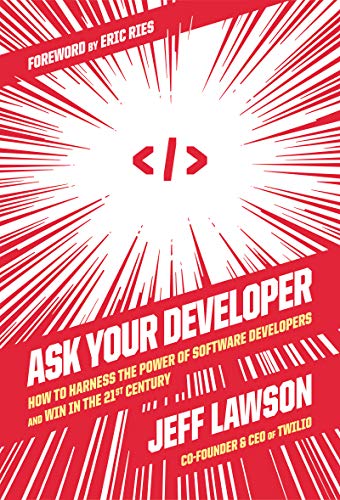
Ask Your Developer: How to Harness the Power of Software Developers and Win in the 21st Century by Jeff Lawson is a thought-provoking book that explores the transformative role of software developers in today’s rapidly evolving business landscape. The author, Jeff Lawson, is the co-founder and CEO of Twilio, a cloud communications platform, and his insights are drawn from his own experiences in building and scaling a successful technology company. You can follow Jeff on X (Twitter) at @jeffiel. In this book report, we will delve into the key themes and takeaways from “Ask Your Developer.”
Key Themes and Takeaways
I studied computer programming in college and graduate school but rarely write any code these days. I do enjoy the occasional hacking together of some Python or Ansible code to automated some task for my day job. I also enjoy home automation and that sometimes requires me to do some light weight scripting to make things work the way I want.
However, I chose not to make a career in developing software. I enjoy the combination of technology and business, applying technology to solving business problems. For that reason, I chose a career in presales. Given that background, Lawson’s book was a really interesting read for me. It gave me a great perspective on how modern DevOps teams are operating. Lawson argues that developers are not just the people who write code; they are the creators of the technology that drives businesses and shapes our daily lives. He advocates for a shift in mindset among non-technical leaders, urging them to actively engage with developers to drive innovation and success.
Developer-Centric Thinking: Lawson introduces the concept of “developer-centric thinking,” which involves treating developers as strategic partners rather than just employees responsible for coding. He highlights the need for non-technical leaders to understand the language and culture of developers to foster collaboration and innovation.
The Power of Software: Lawson discusses the significance of Application Programming Interfaces (APIs) in modern software development. He explains how APIs enable companies to connect with customers, partners, and other systems seamlessly. Twilio’s success story serves as a prime example of the transformative power of APIs. Lawson makes the point that while hardware is needed, having minimal hardware with the ability to add features and functionality via software is really powerful. One of his examples is Tesla. Obviously Tesla builds cars (hardware) but they build them in such a way that they can tweak the operation of those cars by applying software updates. The power of the Tesla approach is really in the software that empowers the cars. Another example is the Apple iPhone. By having less buttons that are single function, they can added functionality later that may not have been thought of by the original designer. The majority of the functionality is in the touch screen which allows for the features to be added or changed by just providing new software.
Innovation Through Experimentation: Lawson encourages companies to adopt an experimentation-driven approach to innovation. He emphasizes the importance of rapid iteration and learning from failure as a means to discover new opportunities and create value. In order to foster this approach, you have to create a corporate culture that encourages staff to try things that may not work out of the first attempt. In some companies, this is discouraged or punishes as it is seen as fairly. I have long been a believer that you only fail if you give up. Making mistakes and learning from them is part of the innovation process.
The Future of Work: The book touches upon the changing landscape of work, including the rise of remote and distributed teams. It explores how companies can adapt to these changes and leverage technology to enable effective collaboration. My current day job is a fully remote environment. It is not without it’s challenges but overall it works well by leveraging modern online collaboration tools and having periodic meet ups.
Walk a Mile in Your Customer’s Shoes: Lawson and his team at Twilio are obsessed with customer feedback and improving their product. It is such a central part of their culture that they have actual shoes hanging in their offices. The manta “walk a mile in another man’s shoes” is quite apparent when you step into a Twilio office. To put this in practice, Twilio requires that each of the developers periodically talks with customers. Lawson makes the point that you cannot have them constantly talking to customer. Developers need uninterrupted blocks of time to get into a flow and do deep work. There is a balance but both developers and customers love when the developers get to hear first hand from the customers how the technology they are building is being put into practice to solve their issues.
Conclusion
“Ask Your Developer” by Jeff Lawson is a compelling exploration of the pivotal role software developers play in the 21st-century business landscape. The book serves as a call to action for non-technical leaders to recognize the potential of developers as strategic partners in driving innovation and success. By fostering a developer-centric culture, embracing software, and promoting ethical considerations, companies can harness the power of software developers to navigate the challenges and opportunities of the digital age.
Lawson’s insights, drawn from his experiences at Twilio, offer valuable lessons for leaders and organizations looking to thrive in an increasingly technology-driven world. “Ask Your Developer” is a must-read for anyone seeking to understand the profound impact of software developers on the future of business and society. I highly recommend adding this book to your reading list.
 Ryburn.org
Leave a comment